The Leopard in the Tree
Two visits with the same leopard in one marula tree — resting with a kill already made, then feeding as the afternoon wore on.
By the time we found her, mid-morning, the work was already done — a young warthog wedged into the fork of a marula tree, and she'd settled into the particular boneless drape only a full leopard manages, in no hurry to do anything else. We never saw the hunt, or the climb up with the carcass; whatever happened in the hours before we arrived stayed hers alone.
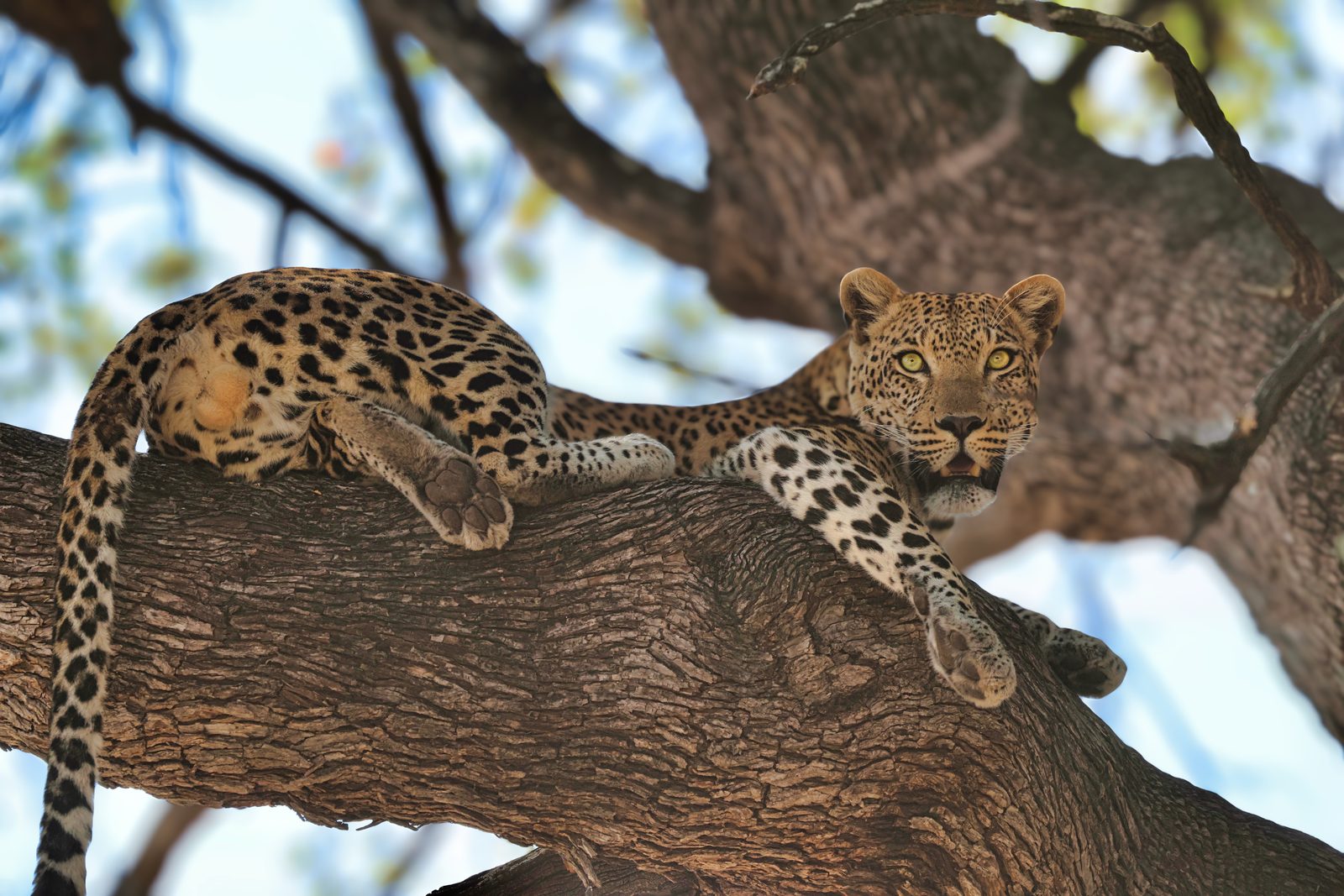
Resting didn't mean unaware. Every so often her head lifted off the branch and her ears swung toward some sound below — a kill cached in a tree still has to be watched, and leopards will lose one to a determined hyena if they get careless. We caught her mid-check, eyes fixed over a fallen trunk, deciding whether whatever she'd heard was worth the effort of caring about.
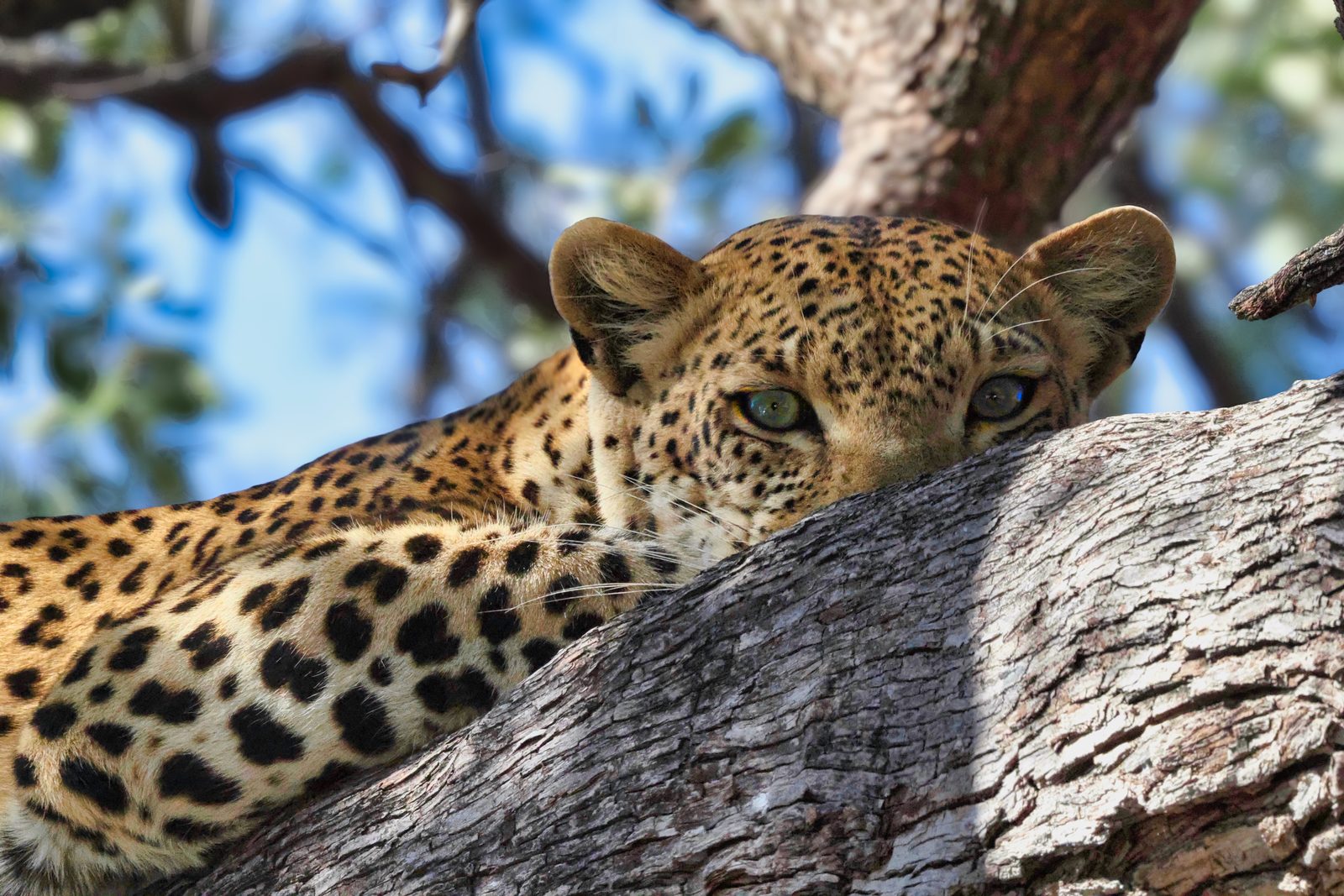
We left her to it and came back in the afternoon on the chance she'd still be there. She was — and this time, hungry.
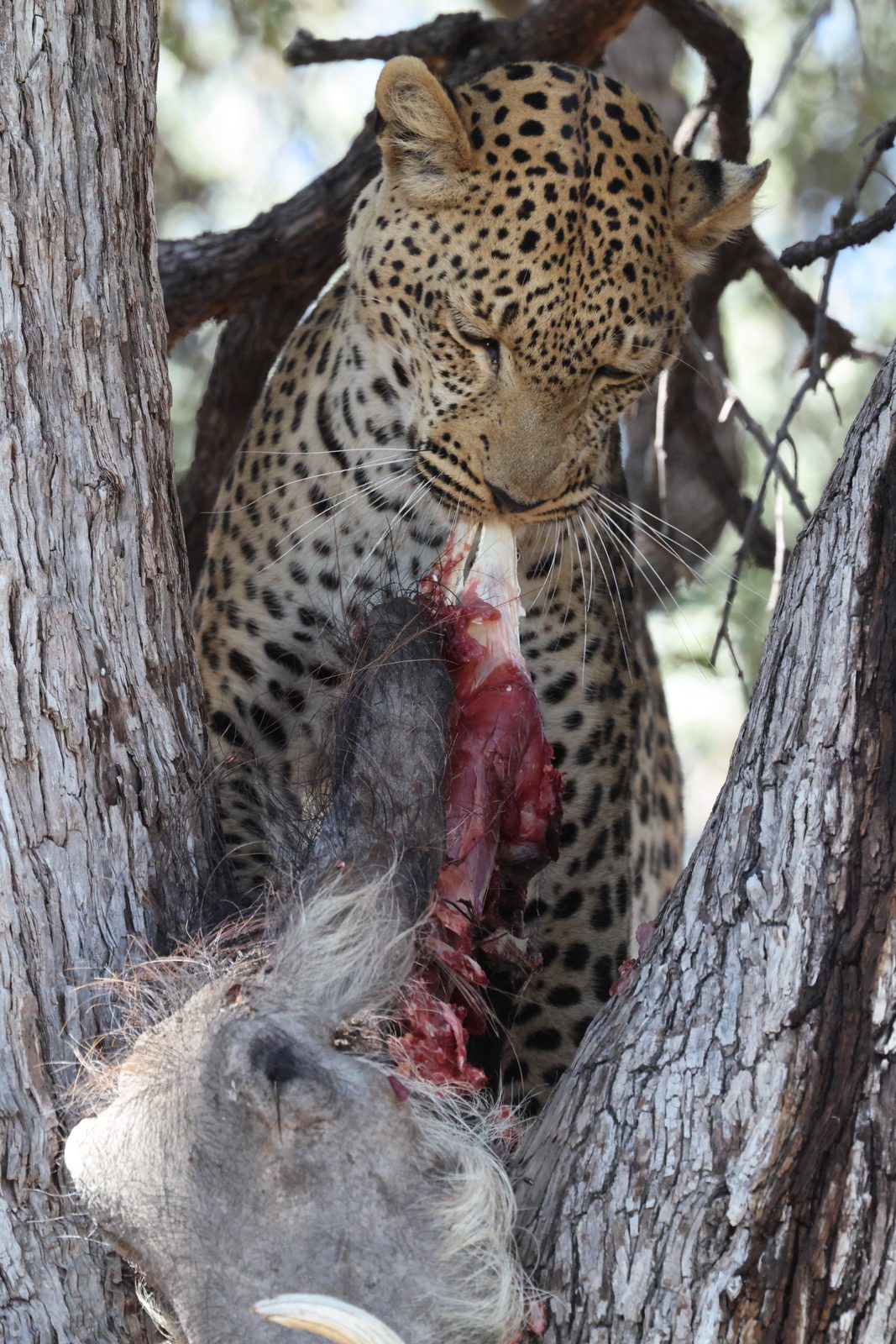
What stays with me from the second sit isn't the tearing so much as what came in between mouthfuls — the direct, entirely unbothered eye contact, holding the vehicle's gaze mid-feed as if we were the least interesting thing in the tree. This is the frame I'd want printed large.
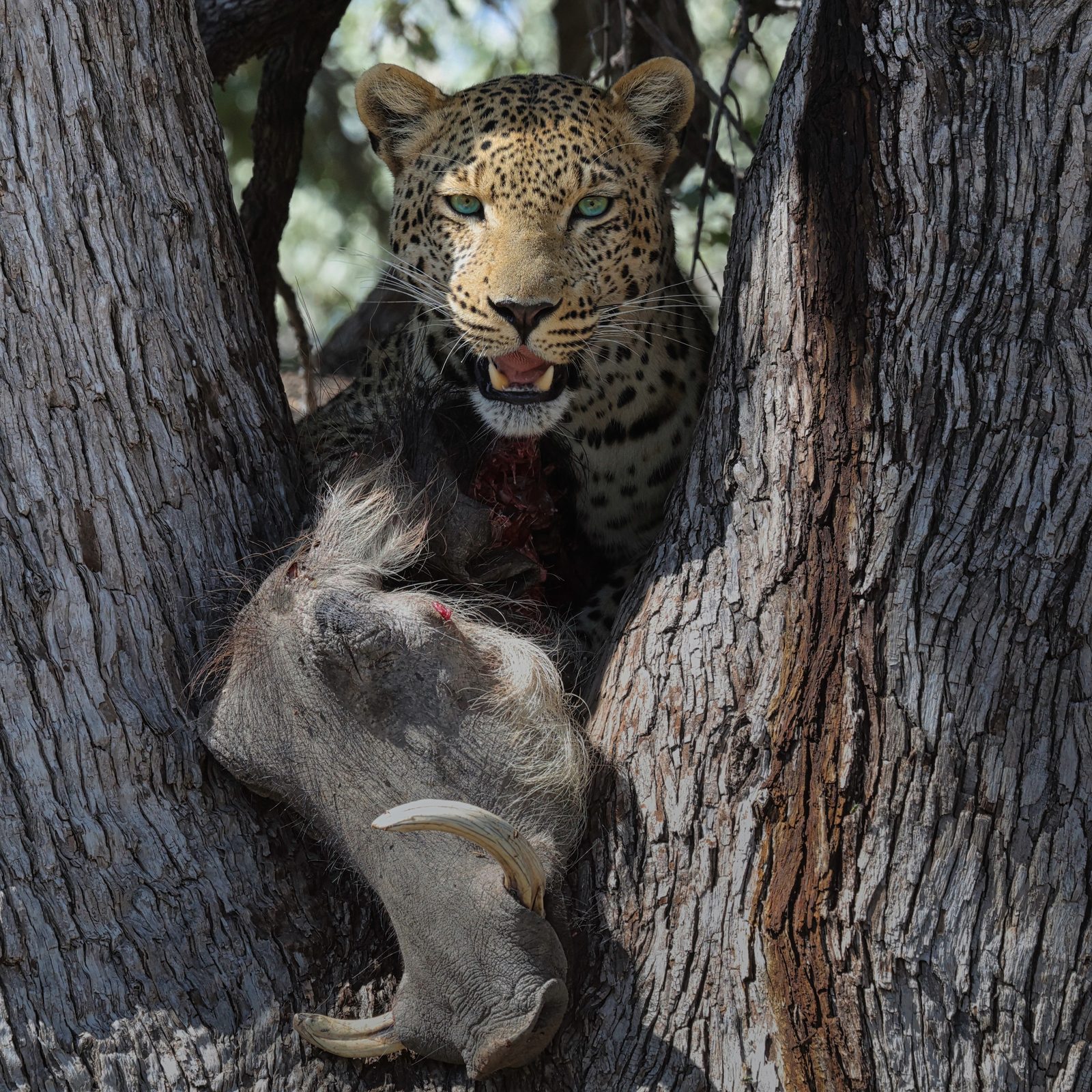
Two sits, five hours apart, for one uninterrupted story — resting, watchful, then finally feeding — even without ever witnessing the hunt that started it. That gap is honest to how most leopard sightings actually go, and it's the reason this gets its own entry rather than being split across the gallery.