Holding the Line
A first week embedded with anti-poaching operations on a private reserve in the Greater Kruger — snares, cameras, drones, and the constant work of staying ahead of the people after the rhino.
I'm two weeks into a volunteer placement on Greater Balepye Nature Reserve, based at its Vygeboom lodge, working with Kruger Conservation NPC — an organisation only formally registered in 2019, though its founders had already been doing the work for thirty years before that, funding anti-poaching units, veterinary care and habitat management here entirely out of their own resources. Their own words for it: "no government grants, no NGO backing, no corporate agenda." This particular reserve made its living for years through trophy hunting; under the direction of the owner's son, it's now phasing that out entirely in favour of conservation and tourism, and this placement exists because of that shift.
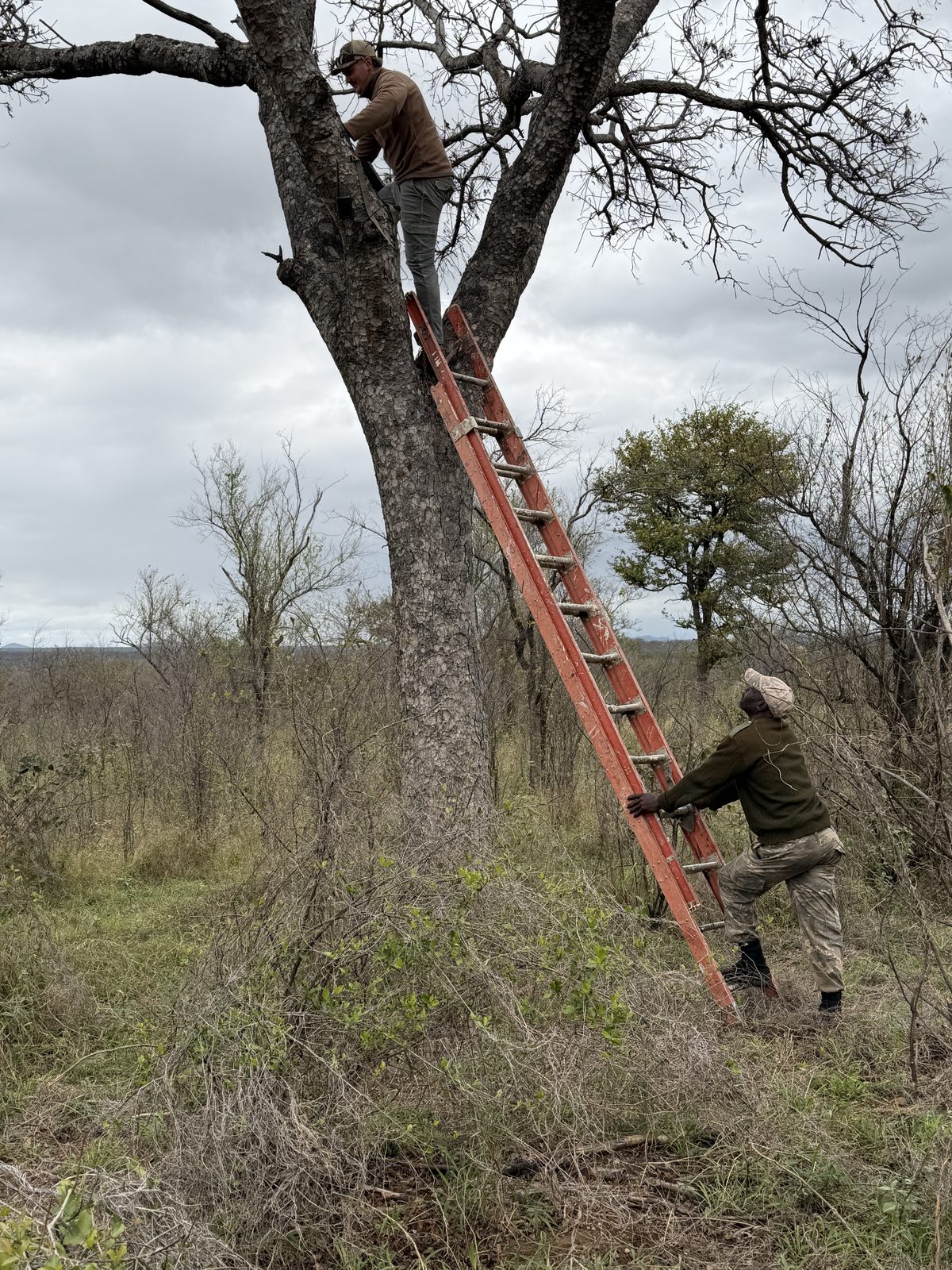
Poaching is the problem that shapes almost everything else here. Security is by far the reserve's largest single cost, and the threat comes in two very different tiers — local snaring for bushmeat at one end, organised syndicates after rhino horn at the other. The first job of the placement was infrastructure: relocating a small radio tower that relays the signal from tracking collars back to the rangers, then getting a perimeter surveillance camera back on its feet after a storm had knocked it out of alignment.
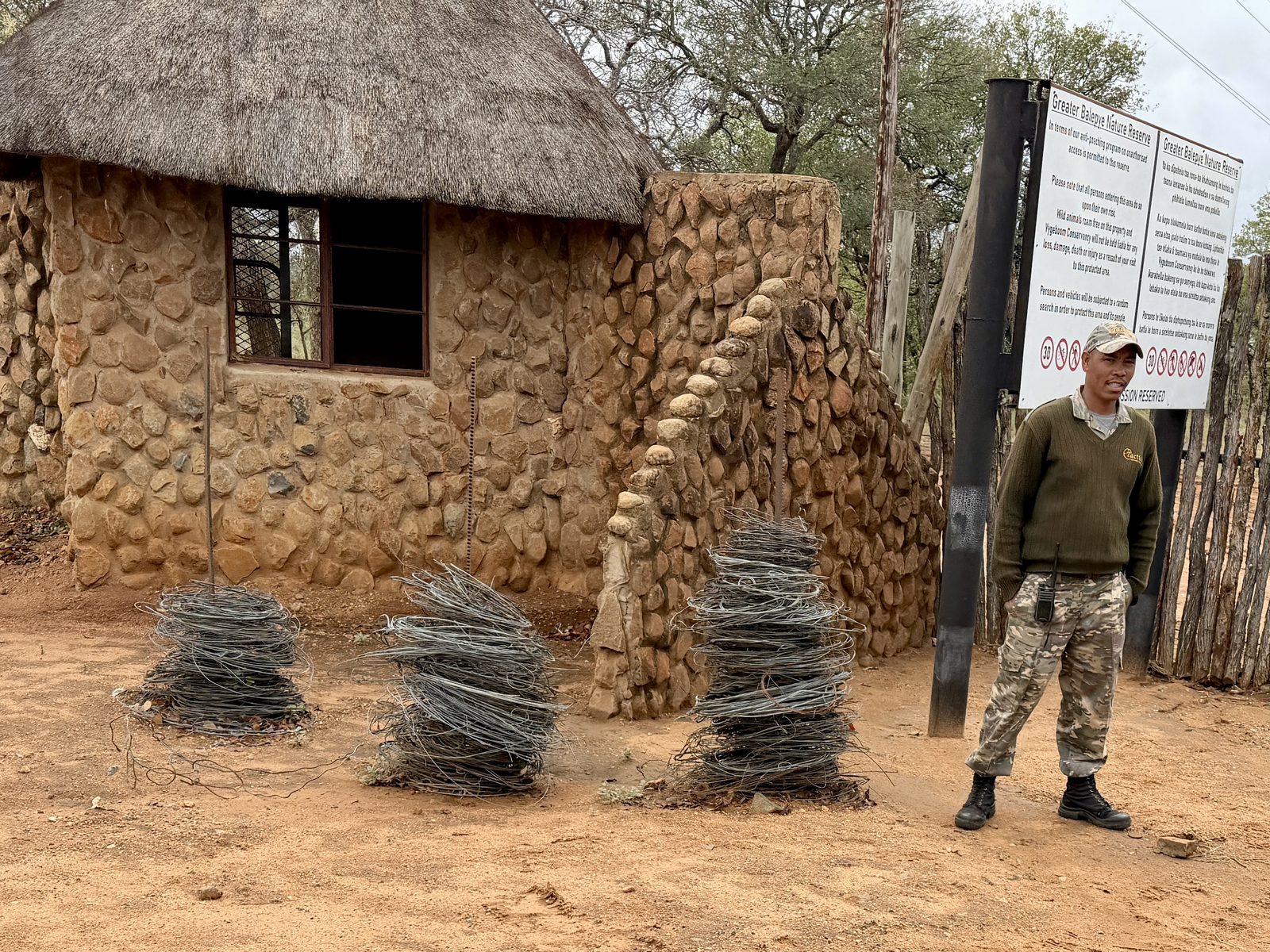
Yesterday was a full day on foot — a walk through the woodland along the fence line specifically hunting for snares, the low-tech end of the poaching problem but no less lethal for it. What came home outside the main gate afterwards put the scale of it in perspective: coil after coil of recovered wire, and what's in the frame below is only a small fraction of what this reserve alone has pulled out of the bush.
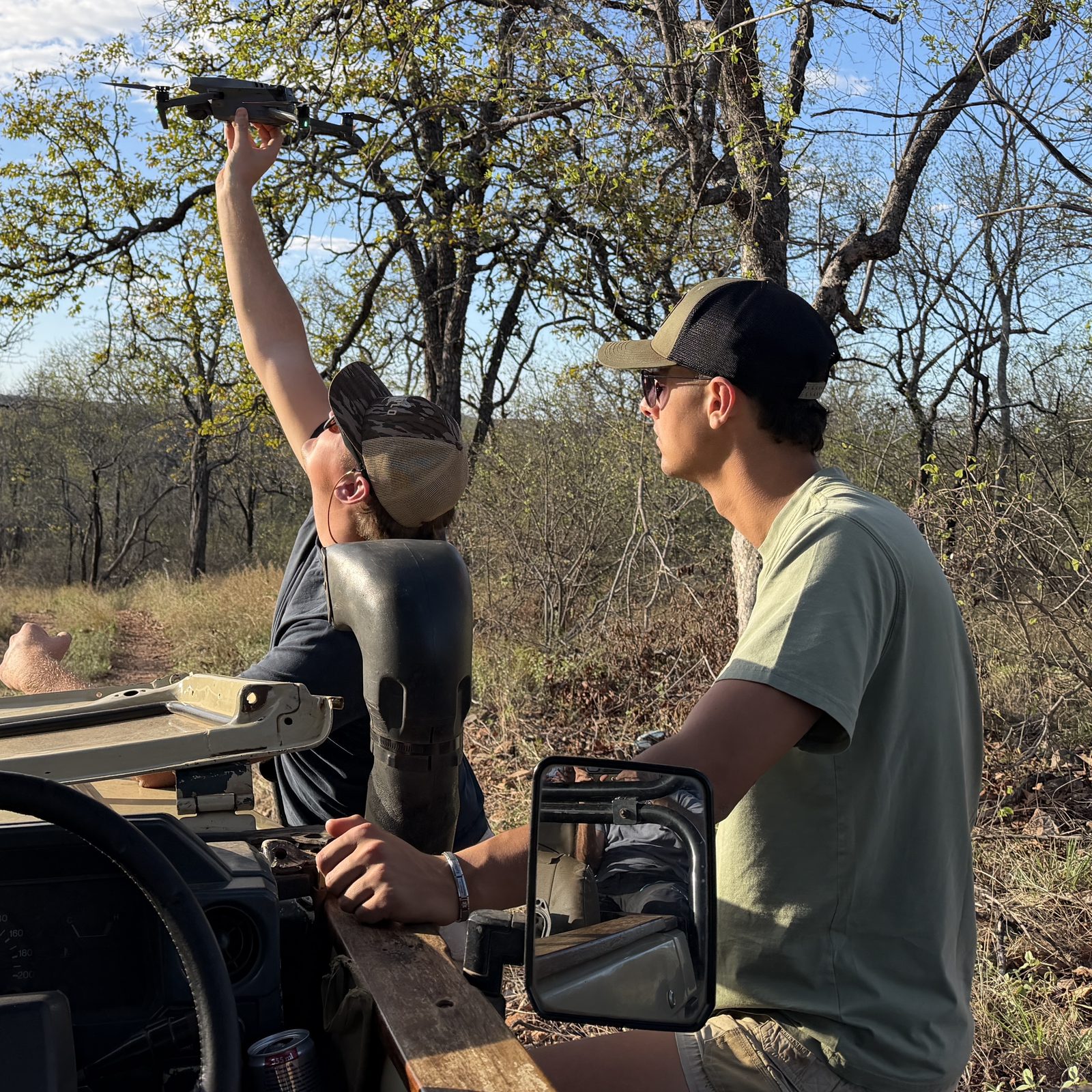
Not everything this week has been about the fence line directly. A day out at one of the reserve's outlier breeding farms — used to bring genetically strong stock into the main population and guard against inbreeding — doubled as its own kind of anti-poaching check: supplemental winter feed for the animals, then a Mavic drone up for a full herd count, confirming nothing had quietly gone missing overnight. Back in the main reserve, a radio locator was used to try to pin down the resident rhinos' position, not for our benefit but so the anti-poaching teams know exactly where to put themselves against a threat that never really lets up.
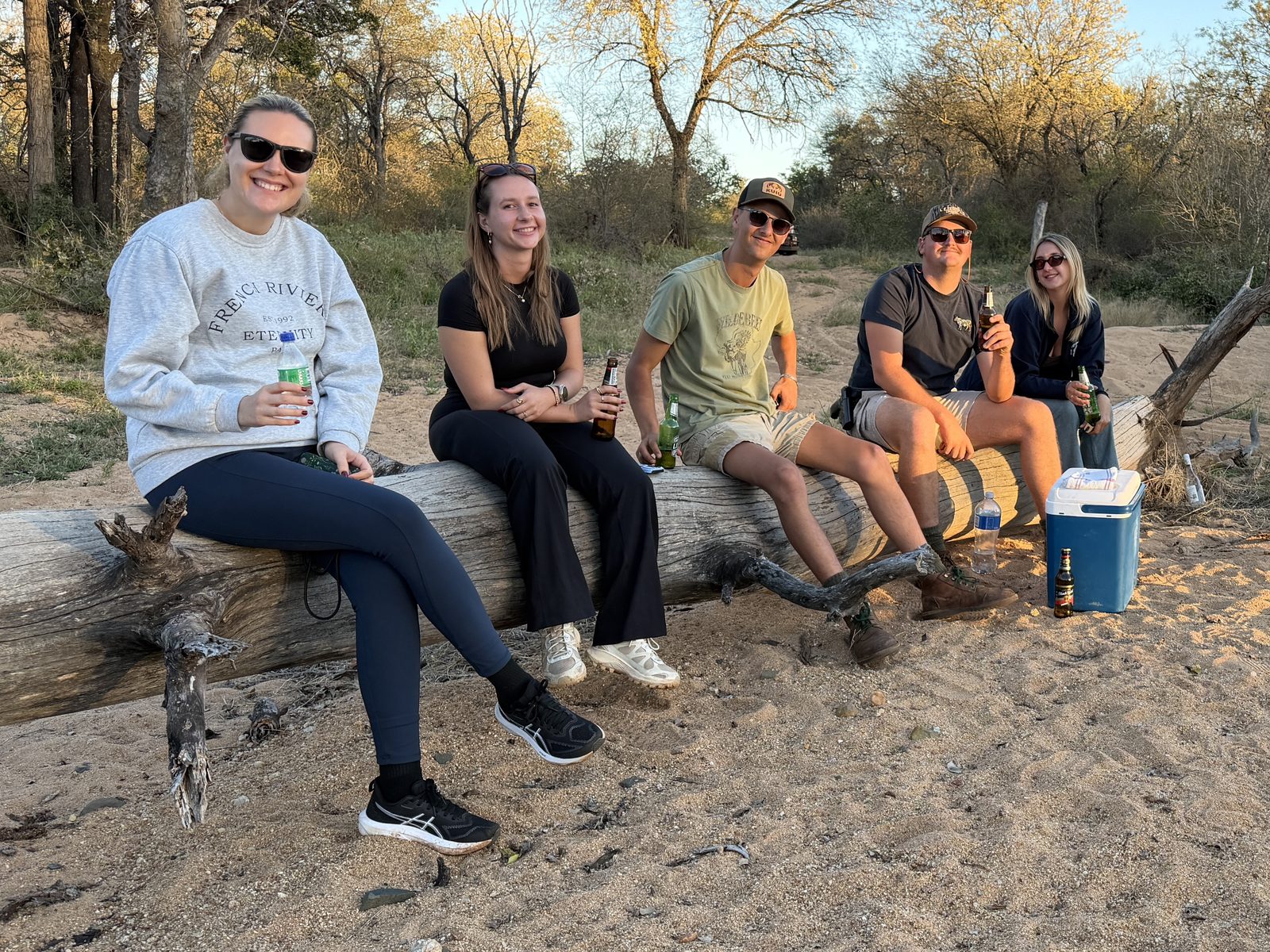
None of it is grim all the time. A perimeter drive to clear rubbish that could choke or sicken an animal, evenings that end the same way most bush days do — and after the tower, the camera, the snare walk and the count, sundowners on a fallen log felt properly earned.
The week closed with a different kind of anti-poaching work — reading the ground itself rather than watching a fence line. A day went into studying the reserve's topography, not to find animals but to work out exactly where poachers would actually cross and move through the bush: the natural corridors, the blind ground, the routes a determined man on foot would choose without realising he'd been predictable. Camera traps went up at those points — not for wildlife, but to record anyone entering the reserve, so the anti-poaching team can be briefed on exactly who and where, and deployed to intercept before an incursion gets any further. Same logic as everything else this week: know the threat's most likely path, and be there first.
That closes out the anti-poaching week. What follows is a different rhythm entirely — veterinary and animal-welfare work, starting with a limping antelope and a question of bloodlines. Read on →