Under the Same Dart
A second week shifts from fence lines to first aid — treating an injured antelope, then repeating the exact same procedure on a healthy one, for an entirely different reason.
Anti-poaching week ended on a study of terrain; this one opened with a study of an animal. The reserve runs its own veterinary and animal-welfare programme alongside its security work, and the first job was straightforward in principle, delicate in practice: a Sable antelope had been seen favouring one leg for several days, and it needed a closer look than binoculars could give.
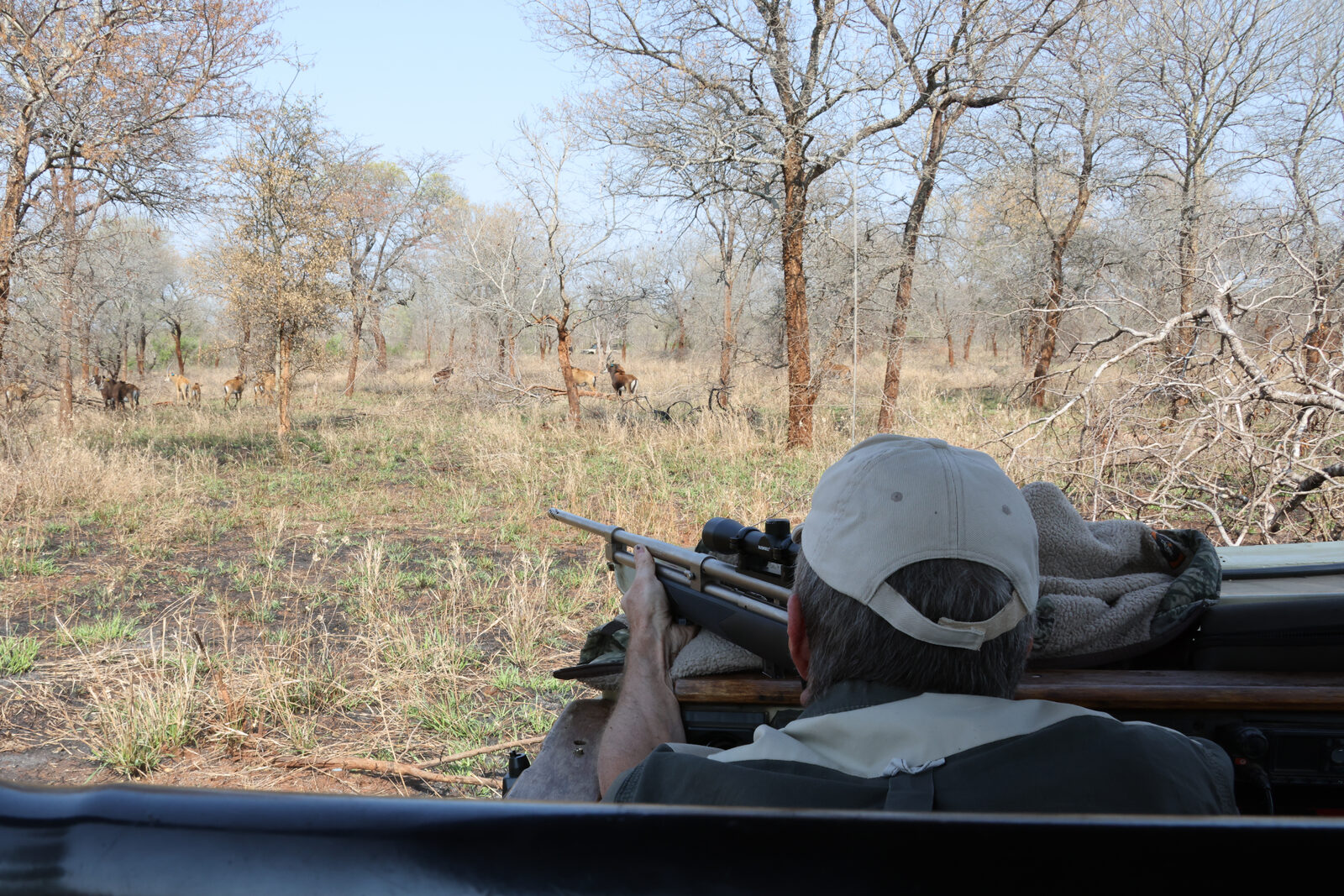
The vet darted her from the vehicle with a sedative, and then came the hardest part of the whole procedure — waiting, at a distance, for the drug to take hold before anyone could approach safely. Once she was down, the cause of the limp turned out to be a torn ligament in the hoof, not visible from any distance. While she was under, the team used the window fully: anti-tick treatment, vitamins, a proper examination — the kind of care that's only possible in the handful of minutes a sedative buys you.
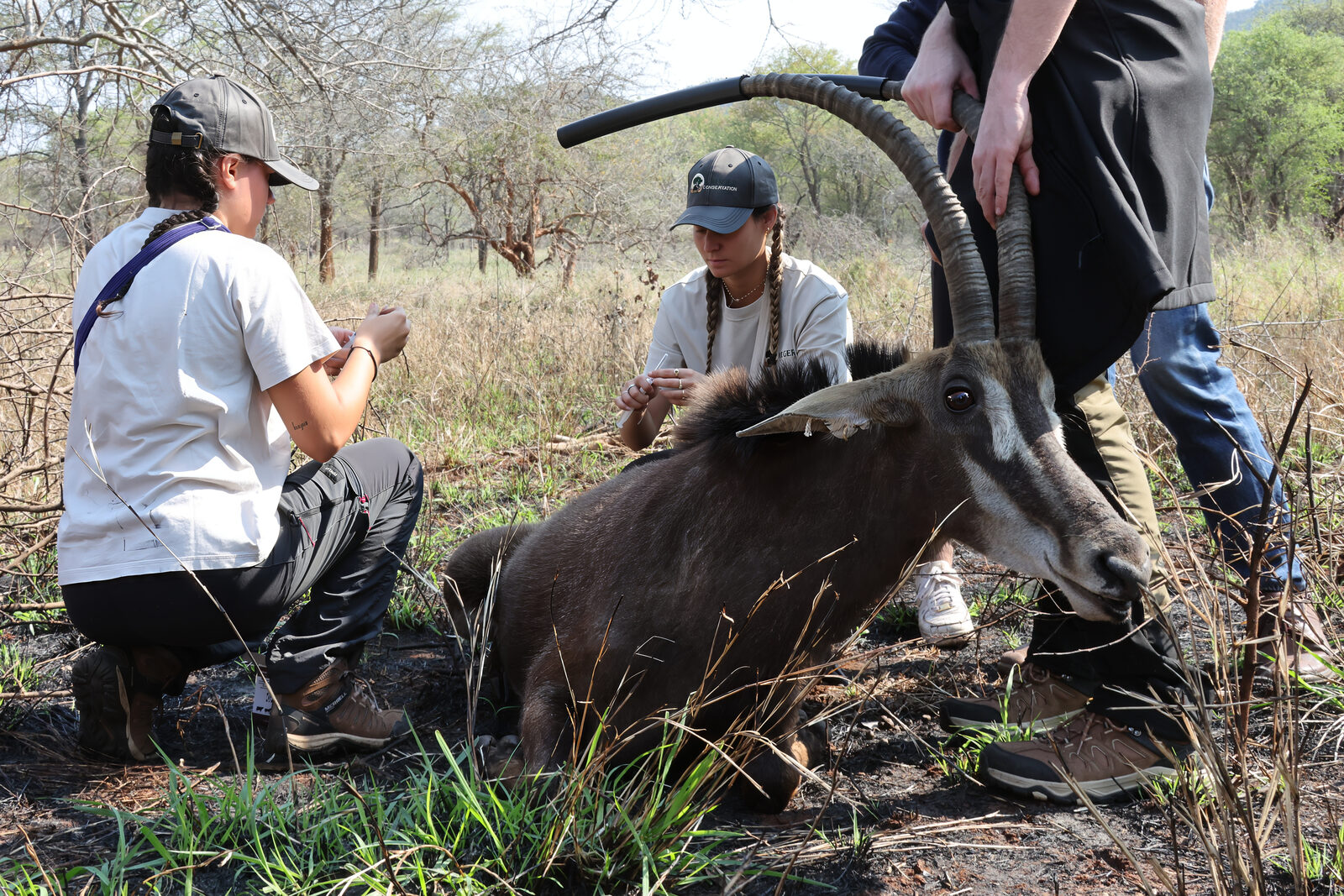
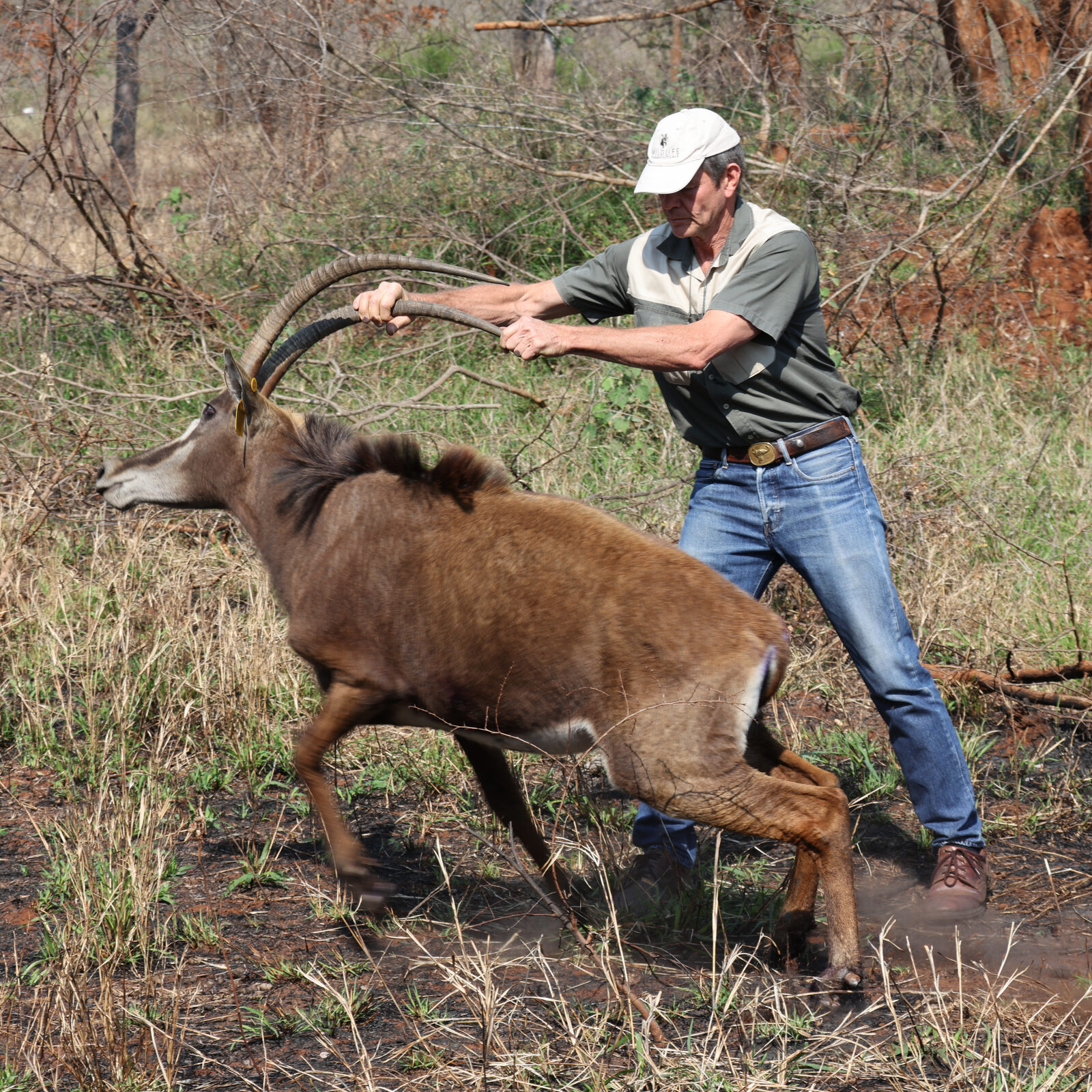
The second procedure of the day looked identical from a distance — dart, wait, approach, work fast — but the reasoning behind it was entirely different. A healthy antelope from another camp was captured the same way and moved to a different part of the reserve, not because anything was wrong with it, but because it wasn't: introducing genetically distinct stock into a herd is how a reserve this size avoids the slow damage of inbreeding over generations. Two darts, two identical-looking procedures, and two completely different reasons for reaching for the rifle — one for an individual animal's welfare, one for the future of the whole herd.
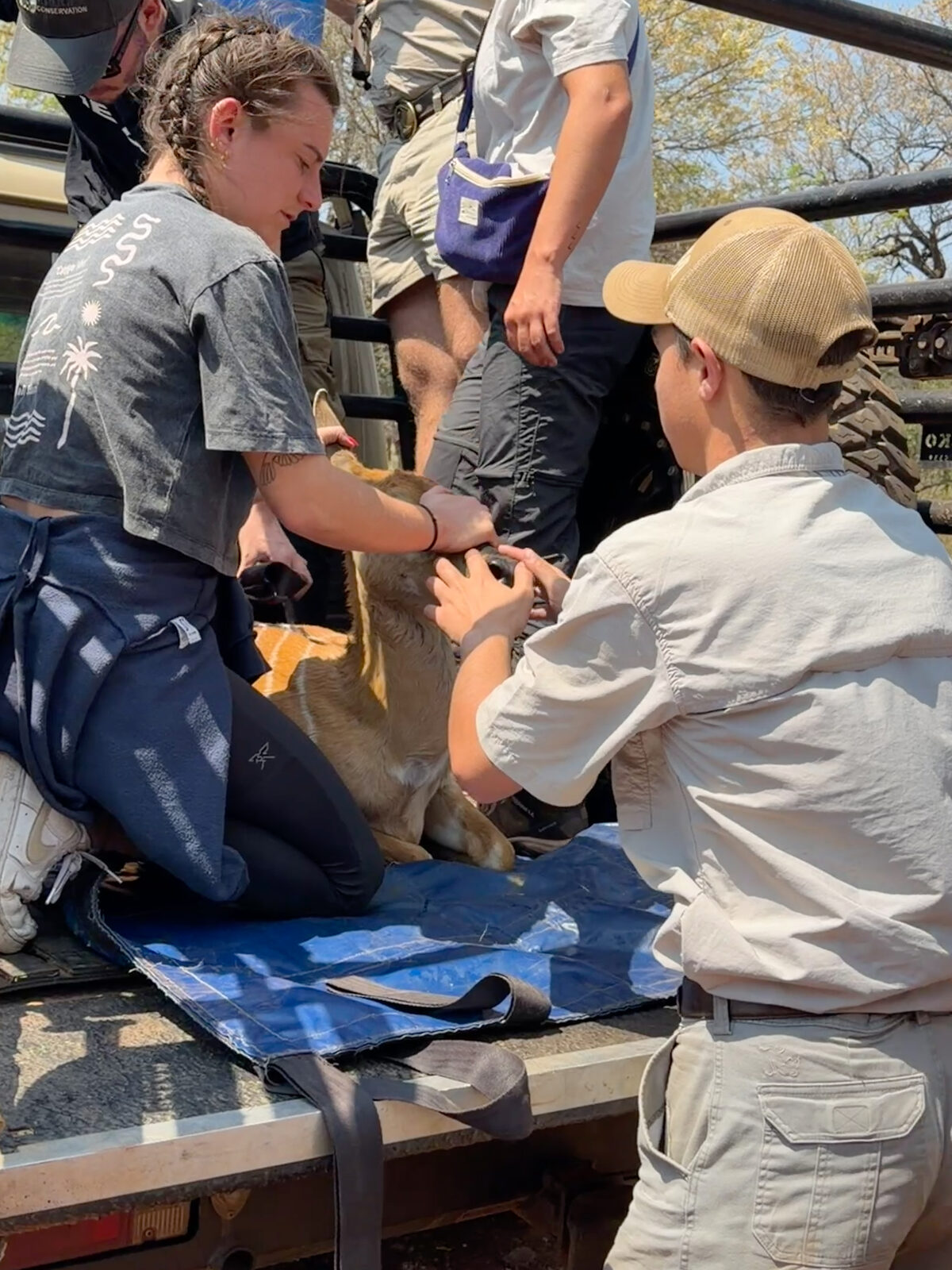
It's an odd thing to sit with: the same skills, the same drugs, the same tense wait in the bush, deployed for a torn ligament one hour and a bloodline the next.
Not every job this week called for a dart gun. One day's task was relocating fish out of a drying pool before it vanished entirely and took its catfish with it — a tidy-sounding bit of conservation admin that turned into one of the funniest days of the whole placement. There was no net to start with, so the morning session went through a couple of increasingly unconvincing improvisations — dragging a tarp through the water, then a bucket — both nearly fruitless. By the afternoon an actual net had been tracked down, and things went rather better: wading in waist-deep, catching mostly catfish by hand, or more honestly by toe, in water too muddy to see an inch into. About twenty came out by the end, a few of them genuinely enormous for a pool that size. Along the way someone found a thorn bush the hard way, a disturbed nest of bees briefly joined the operation, and a flip-flop went missing entirely — recovered, eventually, about twelve inches down in the bottom mud.
Not every rescue needs a sedative and a stopwatch. Some just need a strong stomach for mud and a sense of humour.
Anti-poaching hadn't fully closed out with the last entry, either. It's worth being precise about what the teams here are actually defending against, because it isn't one thing: there are low-level opportunists setting wire snares for bushmeat, and there are organised, armed syndicates hunting rhino specifically for their horns. The first is a crime of opportunity; the second is professional, well-resourced, and willing to kill to get what it came for — and the reserve's security has to be built for both at once, even though the right response to each is completely different.
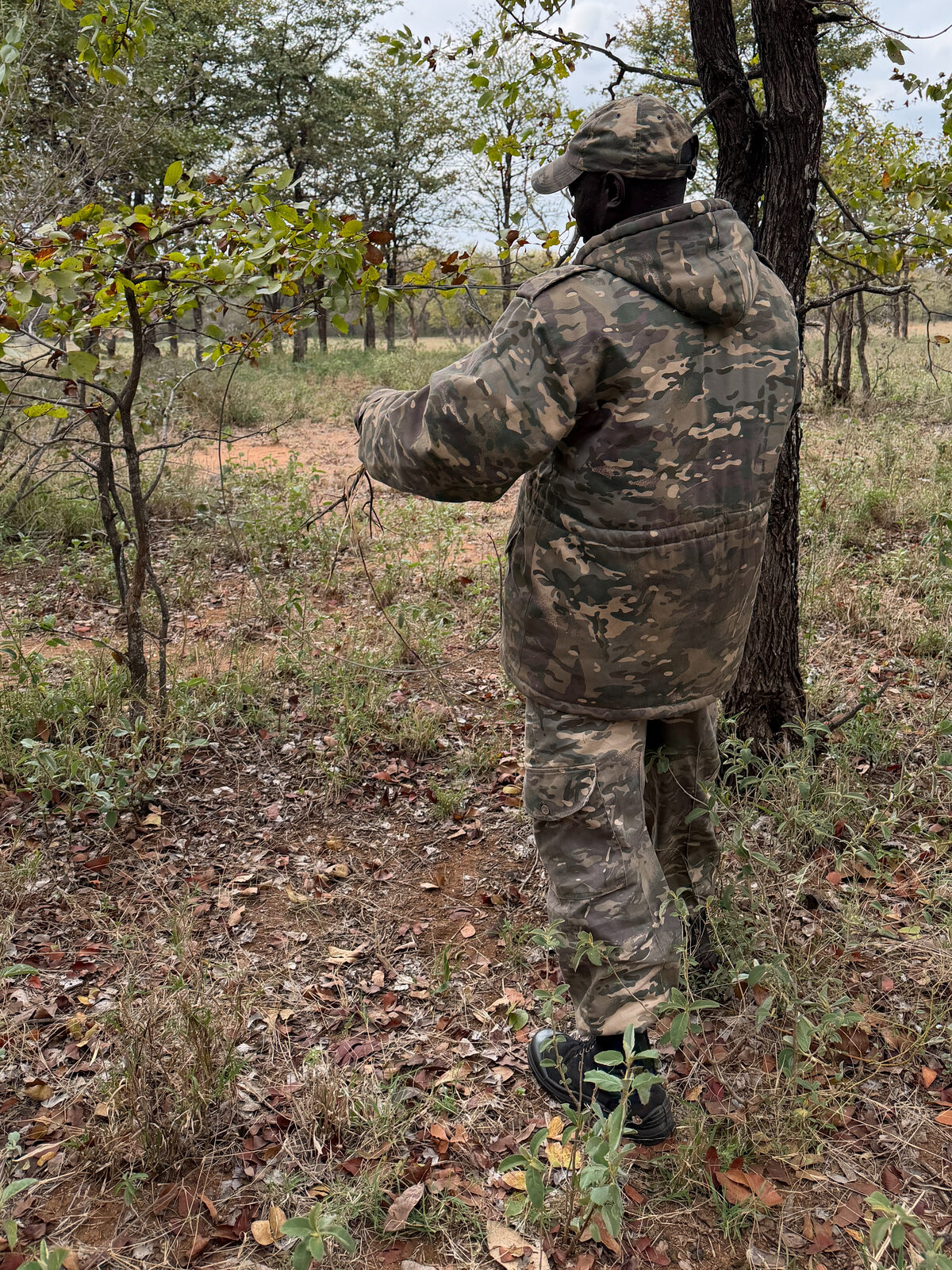
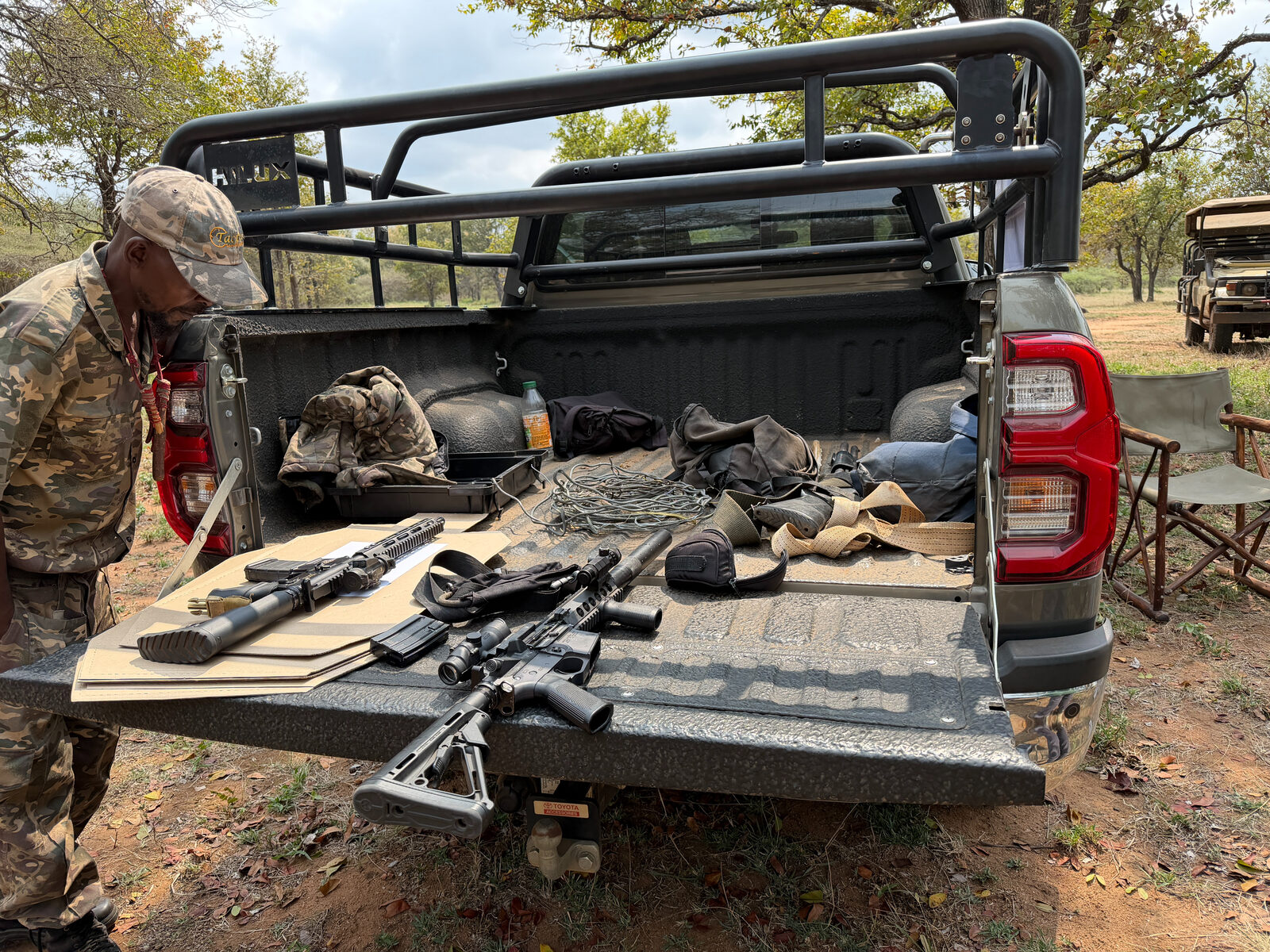
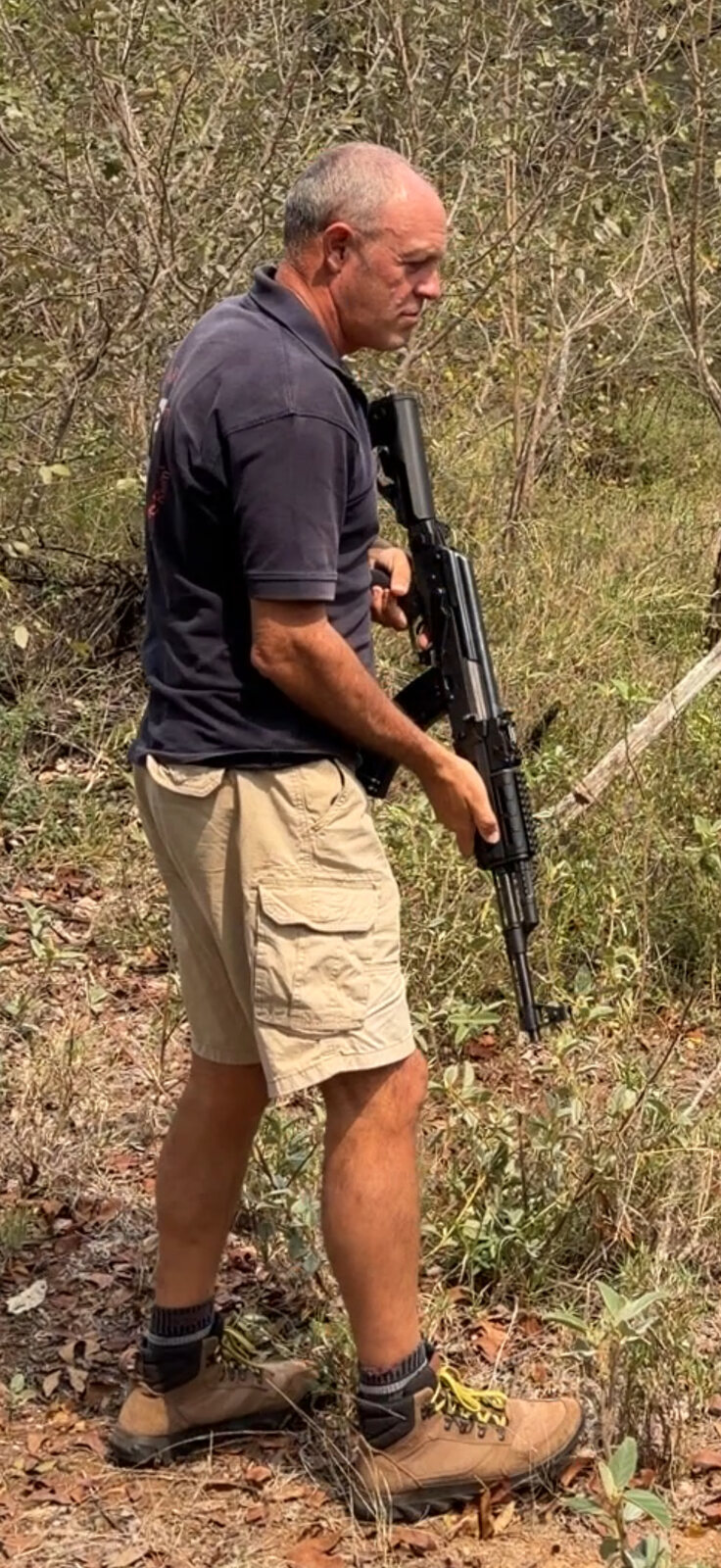
That's also why the second week brought more time spent directly with the anti-poaching field team, including weapon training and target practice with AK-47 rifles. South African law is unambiguous: a shot can only be fired in self-defence, never simply to protect an animal, however valuable. That's exactly why the training is so intensive — a team that may have to defend itself against an armed, professional poacher needs to be as competent and disciplined with a rifle as the people it's up against, and know precisely where that legal line sits long before they're anywhere near having to find it in the field.
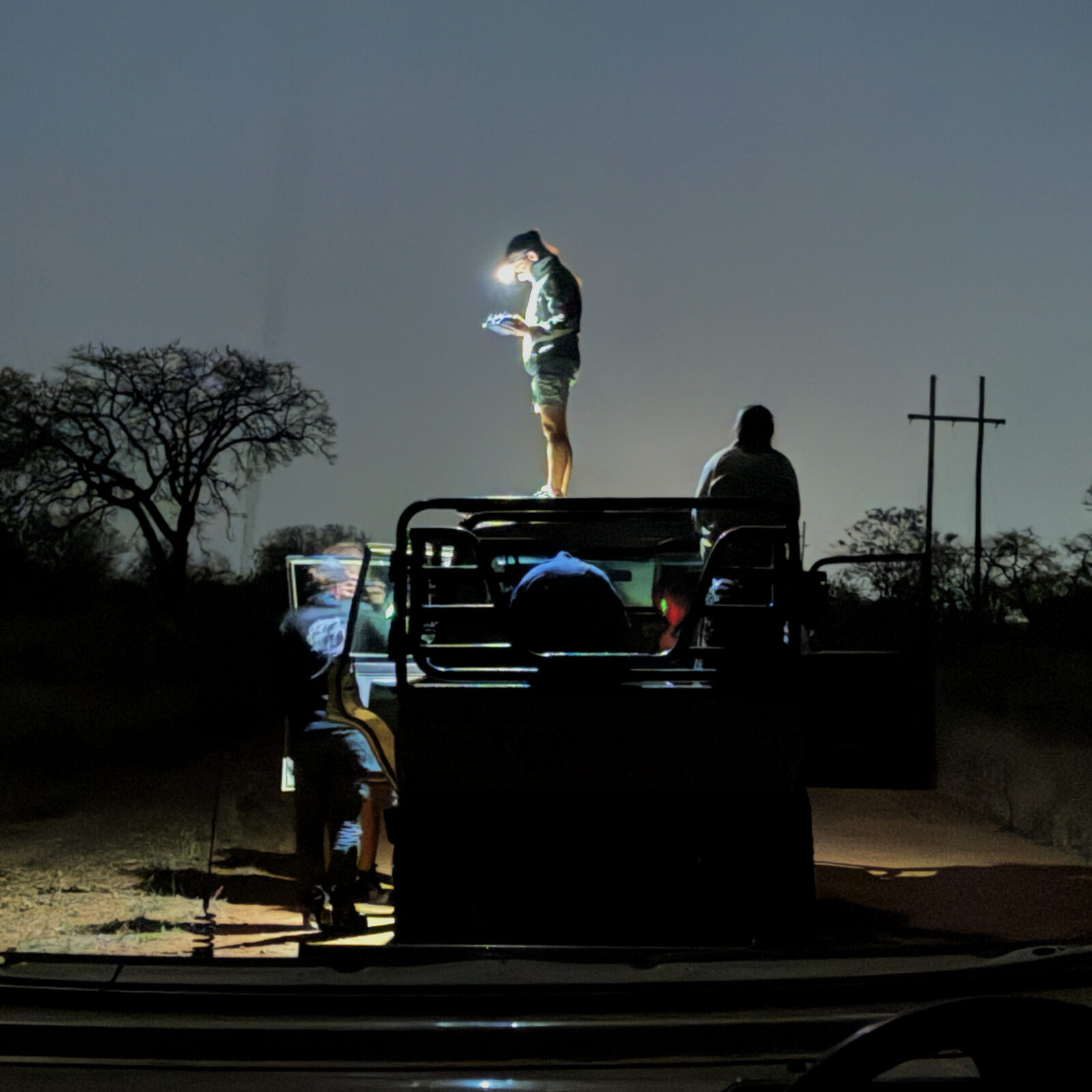
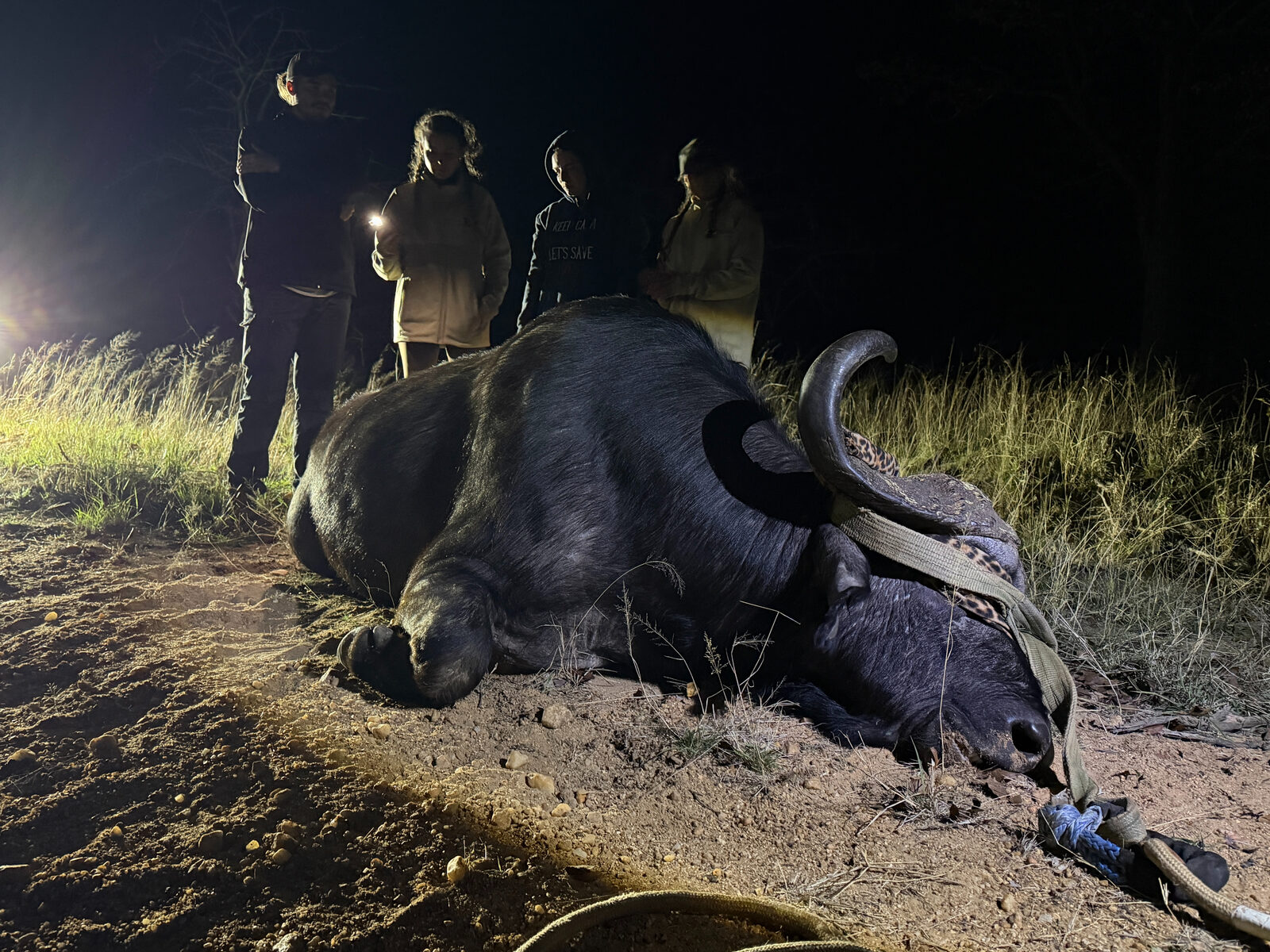
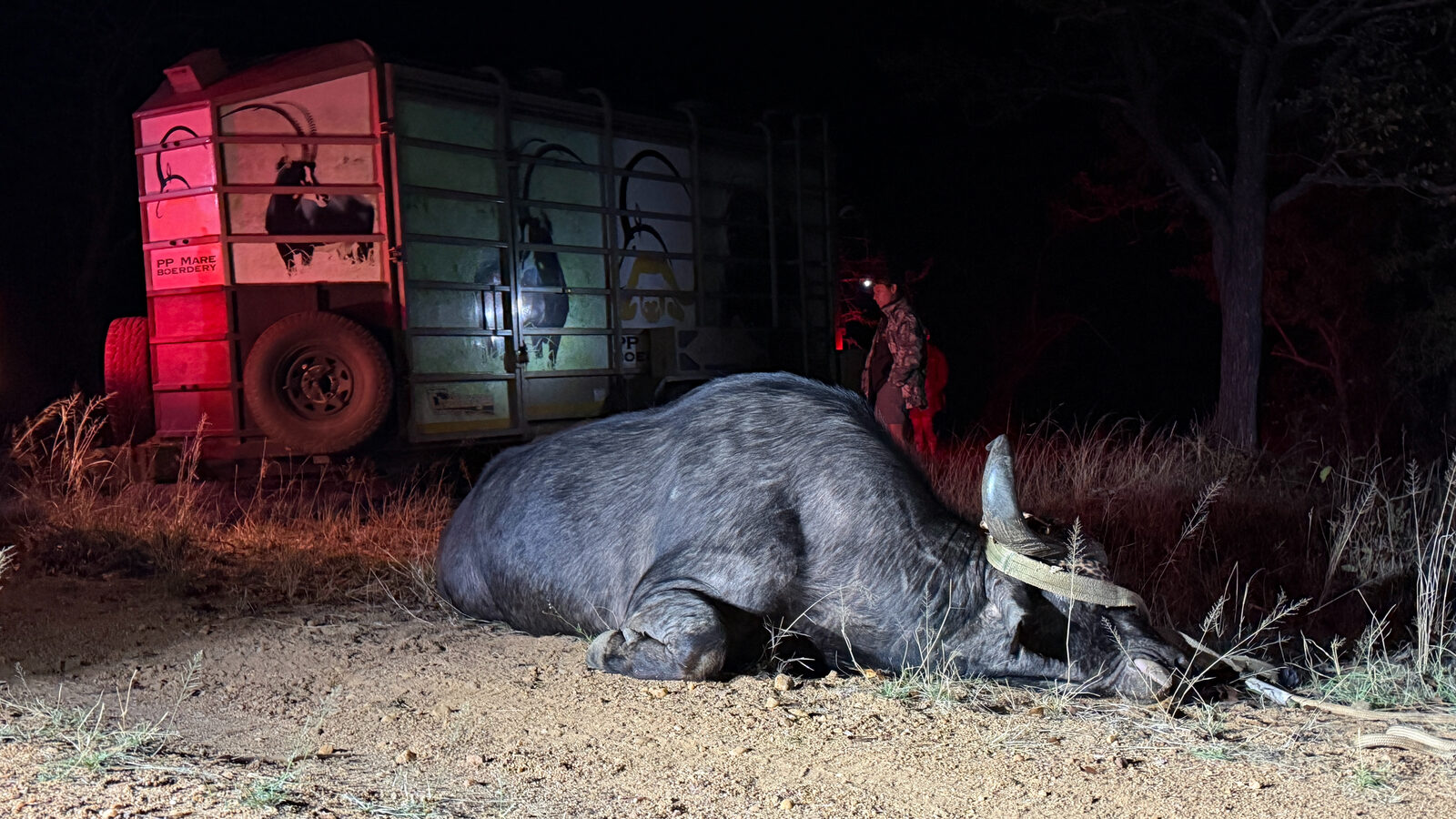
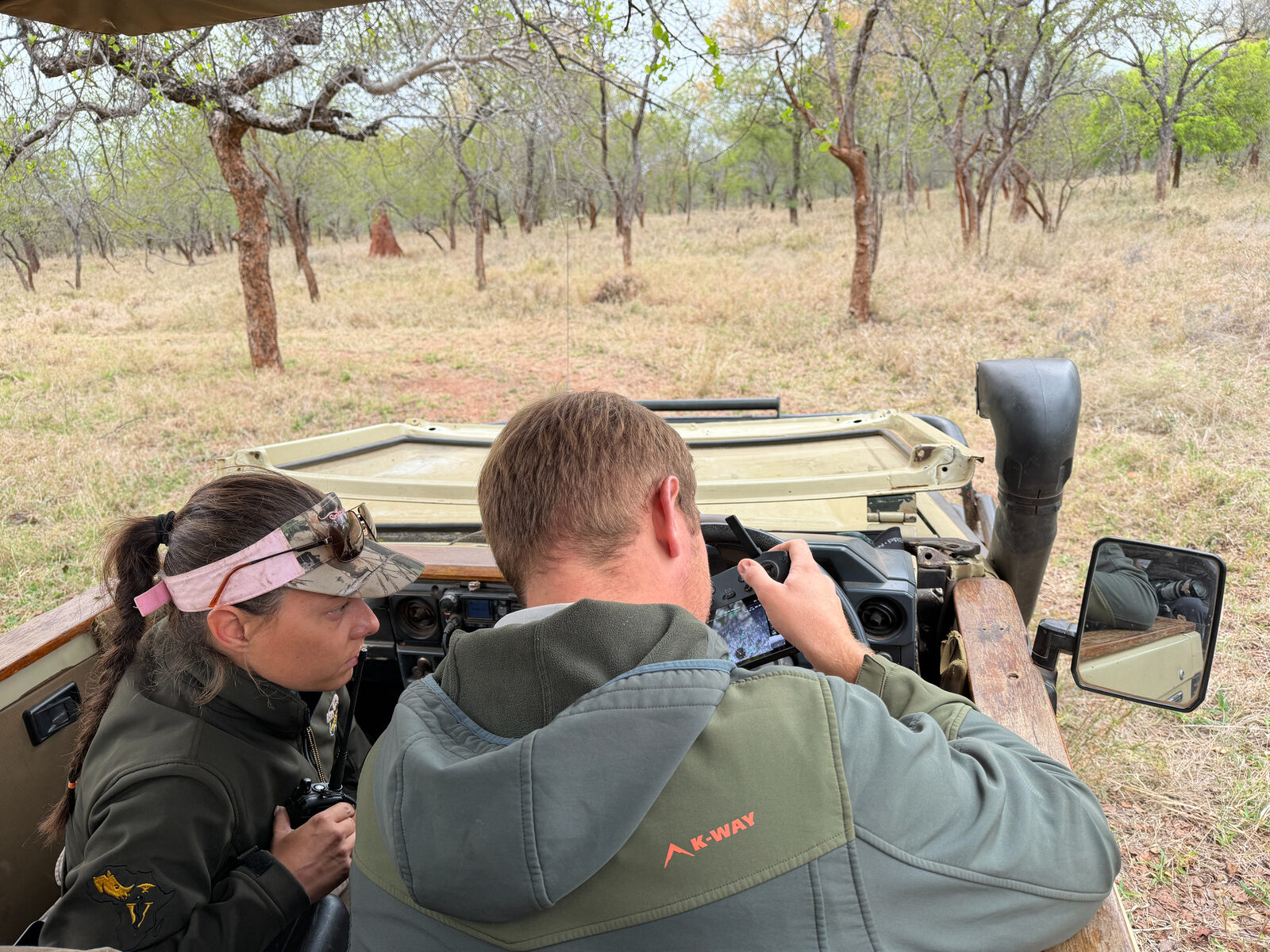
The vet team's next job also returned to the dart gun, this time after dark. A water buffalo bull needed relocating to another camp to keep the gene pool healthy — familiar logic by now — but this one was done at night, when cooler temperatures mean less heat stress and less overall risk to a large animal under sedation. Night darting brings its own problems, chief among them simply finding and keeping track of an animal once it can no longer be seen well from the ground. The team's solution is two DJI Mavic drones flying together, both fitted with thermal cameras: the first locates the bull and guides the dart in, and the second stays on station over the animal once it's hit, keeping eyes on it through the several minutes it takes the sedative to fully take hold — the exact window in which a groggy, one-tonne animal can wander off and disappear into thick bush. Once he was down, the real fight started: manoeuvring roughly a tonne of half-sedated buffalo bull into a transport trailer by rope and by main force, with the team positioned strategically around him — a job no amount of technology makes easy.
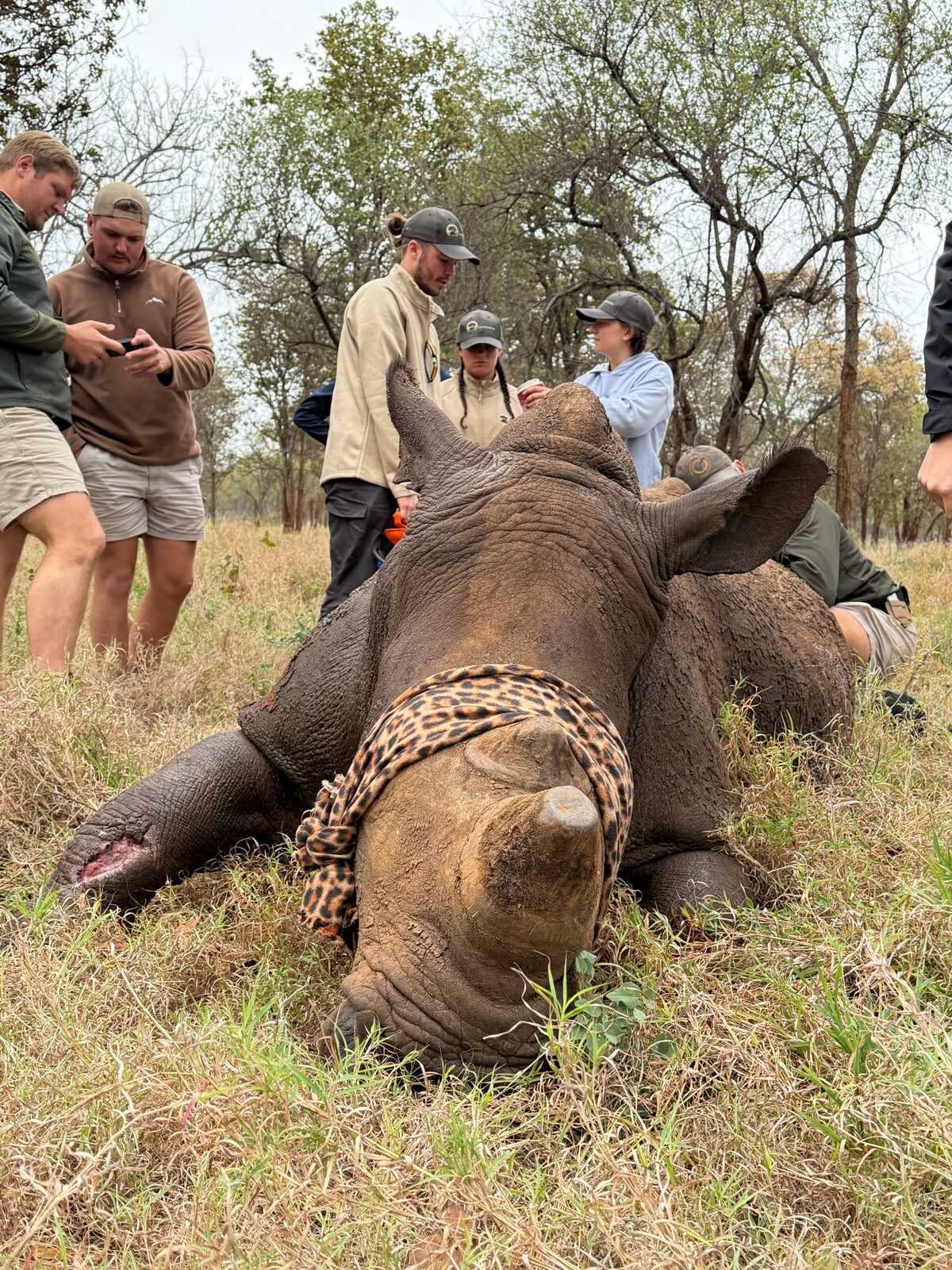
The last job of this stretch was a rhino: a wounded leg needed checking, and the radio collar fitted to track her had run its battery flat. Finding her without a working transmitter meant falling back on a second, still-functioning collar on another tagged rhino known to move with her — located with a radio direction finder, then followed until the target rhino herself came into view. The vet darted her the traditional way this time, with an air rifle rather than from a vehicle, and a drone again kept eyes on her as the sedative took hold, so the team could reach her fast once she went down — every minute that passes before she's found and supported adds unnecessary stress to an animal that size. Once located, the team's first job was simply holding her up: a rhino that keels over fully onto its side while sedated is at real risk, so people, not machinery, kept her weight balanced while she was down. Water was sprayed over her to keep her cool, the wound was treated, and the flat collar was swapped for a working one — then a wake-up injection, and within minutes she was back on her feet, roaming free as if none of it had happened.
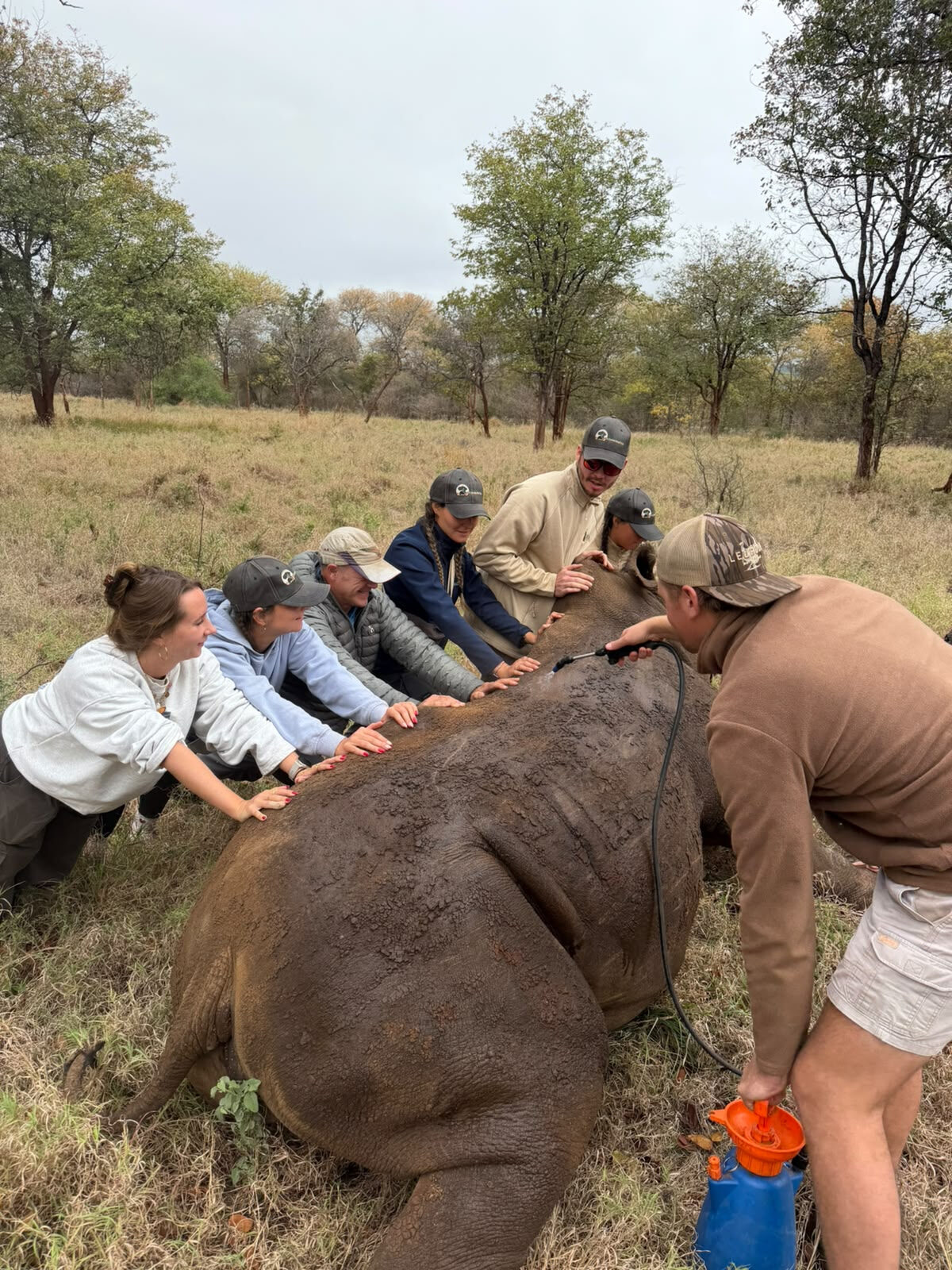
Two more darts, two very different animals, and the same pattern each time — locate, dart, work fast, and stay close until the drug wears off.