Tracking Snow Leopards (and Other Things)
Eighteen days in Kyrgyzstan: the high Tien Shan with the Snow Leopard Foundation, then the Issyk-Kul region.
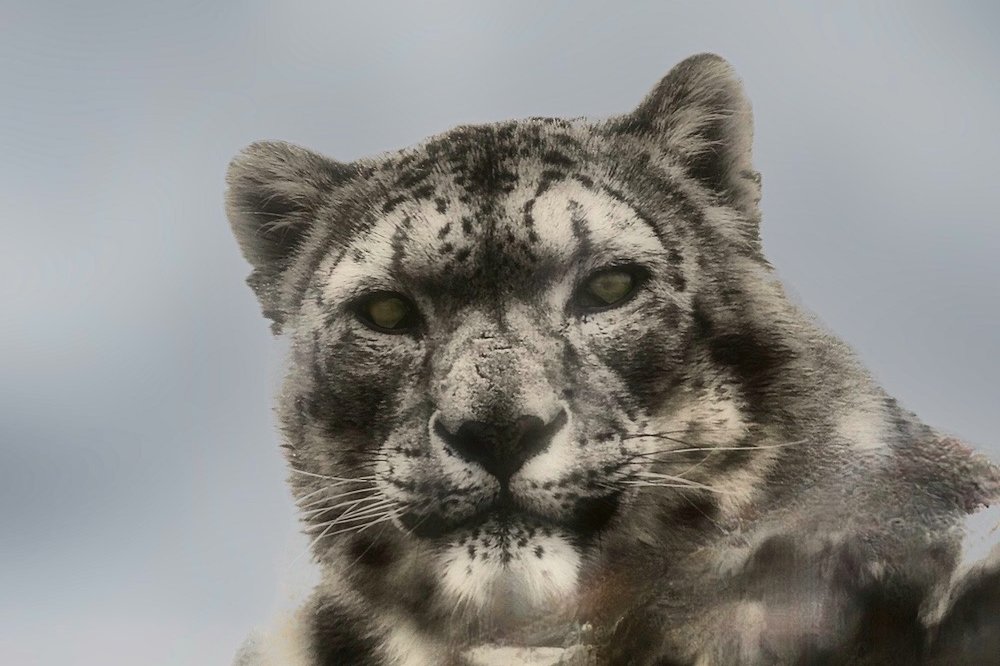
I have long been a sponsor of snow leopards through WWF, but to date this is the closest I have come to one of these threatened and elusive cats: behind the glass of an English zoo. From 1 to 19 December I will be in Kyrgyzstan trying to find one where it belongs, on the high ridges of the central Tien Shan.
The expedition runs with the Snow Leopard Foundation Kyrgyzstan in the Sarychat-Ertash reserve. From Bishkek it is a long drive east towards Karakol, then south on rough gravel past the Kumtor gold mine and up onto the plateau. Base is the reserve's ranger station at roughly 3,000–3,500 m: a cluster of huts, a yurt and a stable, home to a dozen rangers and their families, six to eight hours from the nearest town and well beyond phone signal.
If we are lucky we may get a couple of nights in the station's traditional yurts, heated by coal stoves, but the expectation is that most of the ten days in the field will be spent braving night-time temperatures of −30°C in our one-man tents. Food is hearty Kyrgyz fare: soups, bread, noodles, mutton and yak. The team will be small — just me, a ranger and one other person, details as yet unknown — and in this part of the world it is quite possible that much of our communication will be in made-up sign language.
Days start at four or five to reach a viewpoint before dawn, when the cats are most likely to be moving. Most of the work is glassing valleys and ridges through spotting scopes — moving between them on horseback with the rangers, on foot or by 4×4 — and reading tracks, scrapes and kills to decide where to watch. Late-November visitors have recorded −10°C by day; December will be colder still.
The Foundation quotes a sighting rate of around 90%, but a sighting usually means a cat a kilometre away on a far ridge, often near an ibex kill. I am packing the longest lens I can carry and a solid support, and expect to crop hard. The reserve also holds argali, ibex, wolves, lammergeier and griffon vultures, with an outside chance of Pallas's cat.
The trip is built for observation rather than research, but the money is the point: the conservation fee and guiding income go directly to the rangers and to protecting the reserve. The Foundation has run camera-trap surveys in Sarychat for years, and I hope to join the rangers on a camera check and contribute images and sighting records to their monitoring.
Afterwards I drop down to the Issyk-Kul region: Karakol, the hot-spring valley of Altyn-Arashan, the red sandstone cliffs of Jeti-Oguz, and the eagle hunters of Bokonbaevo, who still hunt with golden eagles. There is no signal on the plateau, so the next post will come down the mountain with me.